Winter Tires: What Actually Matters in Canada
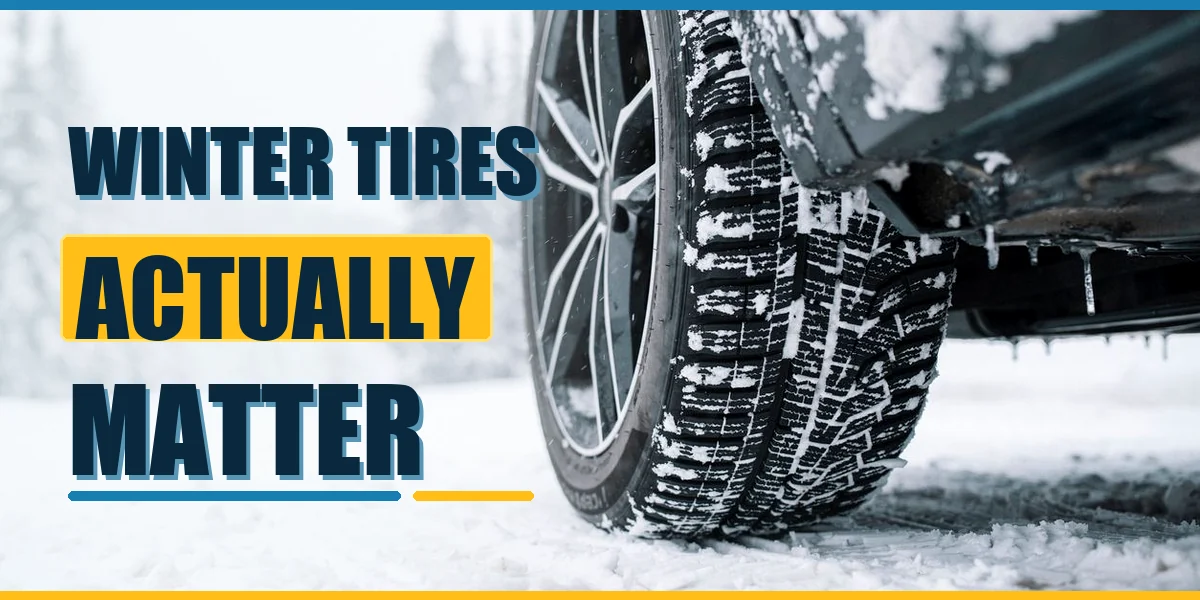
Every October someone tells me their SUV has all-wheel drive, so they're fine. Every January one of those people texts me from the shoulder.
Winter tires are the cheapest safety upgrade on a car, and most of what people argue about online barely matters. Here's the short version of what does.
What actually matters in a winter tire?
Below about 7°C, the rubber compound matters more than anything else. Look for the three-peak mountain snowflake (3PMSF) symbol, buy four matching tires, set them to the pressure on your door sticker, and replace them near 4 mm of tread. All-wheel drive is not a substitute.
That's the whole article. The rest is why.
The 7°C rule
All-season rubber hardens in the cold. Not just in snow. On dry pavement, at 5 a.m., with frost on the overpass.
The number the industry keeps repeating, Michelin included, is around 7°C. When your daily average sits near or below that, winter rubber starts doing real work.
For most of Canada that means on in late October or early November, off in April. Don't wait for the first storm. By then you've already spent three weeks braking on hard rubber.
Book the changeover when daily average temperatures sit near or below 7°C, usually mid-October to early November. Waiting for the first snowfall means weeks of driving on hardened all-season rubber through frost and black-ice season.
3PMSF vs M+S
| Marking | What it means | What it doesn't mean |
|---|---|---|
| 3PMSF (mountain + snowflake) | Passed a standardized packed-snow traction test | Not a ranking. Not an ice guarantee. |
| M+S (mud + snow) | A tread-pattern category on all-seasons | Not proof of severe-snow performance |
| Ice Grip | Extra marking on some ice-focused tires | Still check independent test results |
If it doesn't wear the snowflake, it isn't a winter tire. M+S alone is 1970s marketing.
The snowflake is a floor, not a score. Once you're inside that group, independent ice-braking tests decide.
Why winter rubber grips
- Compound. Softer, silica-rich rubber stays flexible in the cold and conforms to cold asphalt instead of skating over it. Trade-off: it cooks in summer heat.
- Sipes. Hundreds of thin slits open under load and turn into biting edges. Biggest reason a true winter beats an all-weather on ice.
- Voids. Big grooves clear slush and pack snow into the tread. Snow grips snow better than rubber grips snow.
Aggressive-looking tread is not the same as a tested stopping distance.
The AWD myth
All-wheel drive helps you go. That's it.
It doesn't shorten stopping distance or add cornering grip. Braking and turning happen at four contact patches the size of your hand, and the drivetrain has no say in how sticky they are.
A front-drive compact on four winters will out-brake an AWD crossover on all-seasons, on snow and on ice. Same message CAA-Quebec and every major tire maker has pushed for years.
Yes, you still need winter tires with AWD. All-wheel drive improves acceleration and traction when pulling away, but it does not improve braking or cornering grip. Stopping distance comes from tire compound and tread, not drivetrain. An AWD vehicle on all-seasons stops worse on ice than a front-drive car on four winter tires.
Four tires, always
Two winters on the drive axle builds a car with two grip levels. It will surprise you mid-corner, usually in the direction you don't want.
Same model, size, load index and speed rating on all four corners.
Picking a category
| Type | Best for | The catch |
|---|---|---|
| Dedicated winter (studless) | Most Canadians | Seasonal swap; wears fast in heat |
| Nordic / ice-focused | Very cold, black ice, rural roads | Softer, wears quicker |
| Studded | Severe ice, where legal | Loud; no benefit on bare pavement |
| All-weather (3PMSF) | Mild winters, cleared streets | A compromise on ice |
| All-season (M+S) | Three-season use | Hardens in the cold |
Most people want dedicated studless. All-weather is fair if your winter is mild and you won't store a second set, as long as you know what you gave up on ice.
Size, load and speed rating
Match your door placard or owner's manual. Some vehicles list an approved narrower winter size that cuts through snow better. Only use sizes the manufacturer lists.
Load index must meet or beat the original. Never downsize capacity to save money.
Winter speed ratings are often lower (Q, R, S, T, H). That's normal. Keep all four matched and don't exceed the rating.
Pressure
Air contracts in the cold, roughly 1 psi per 5 to 6°C drop. Set on a warm September afternoon, you're several psi low by January with no leak at all.
Set pressure cold, before driving, to the number on the door jamb. Not the sidewall number, which is the tire's maximum, not your car's target.
Check monthly. The TPMS light usually waits until you're already well down.
Tread depth
The legal minimum of 1.6 mm is a baldness law, not a winter standard.
Snow grip falls off well before that. Plan replacement around 4 mm for winter use. Many winter tires have separate winter wear indicators. If they say you're done for snow, you're done.
The rules where you live
- Quebec: winter-rated tires required roughly December 1 to March 15, with fines. Studs get a longer window. Confirm with SAAQ each season.
- Rest of Canada: mostly no mandate, but some provinces require insurers to offer a winter-tire discount. Ask your broker.
- BC mountain highways: seasonal winter-tire and chain rules on designated routes. Check DriveBC before mountain trips.
- Federal: Transport Canada sets the safety framework; provinces set the mandates.
Making them last
- A second set of wheels is cheaper long-term and safer for your TPMS sensors.
- Rotate every 8,000 to 10,000 km.
- Store the off-season set clean, cool, dark, inflated, away from electric motors.
- Don't run winters into summer heat.
- Fix your alignment. Winter treads show bad toe or camber fast.
FAQ
Are all-weather tires good enough for a Canadian winter?
For mild winters and cleared city streets, a 3PMSF all-weather is a fair compromise. For prairie cold, freezing rain or regular highway winter driving, a dedicated winter stops noticeably shorter on ice.
Can I just put winter tires on the front?
No. Mixed grip front to rear makes the car unpredictable under braking and in corners. Four matching winters or none.
Is an AWD SUV okay on all-seasons?
AWD gets you moving on a slick hill, which is where drivers feel confident. Stopping and turning still come from the tires. The same SUV on four winters brakes meaningfully shorter.
How long do winter tires last?
Usually four to six seasons at typical Canadian mileage, but tread depth decides, not the calendar. Replace around 4 mm for winter duty.
Do studded tires make sense?
Only with frequent ice on rural or untreated roads, and only where they're legal in-season. On bare pavement they're loud and can give up wet grip versus a good studless winter.
Bottom line
Cold rubber, the snowflake, four matching tires, correct pressure. Everything else is noise.
Not sure what size you take or when to book the swap? Come see us or call the store. We'll pull your placard specs, tell you straight whether all-weathers are enough for how you drive, and get you booked before the first cold snap fills the calendar.
Sources: Transport Canada tire safety guidance, SAAQ winter tire rules, CAA-Quebec, Michelin Canada, DriveBC seasonal highway requirements, and North American 3PMSF snow traction standards.